
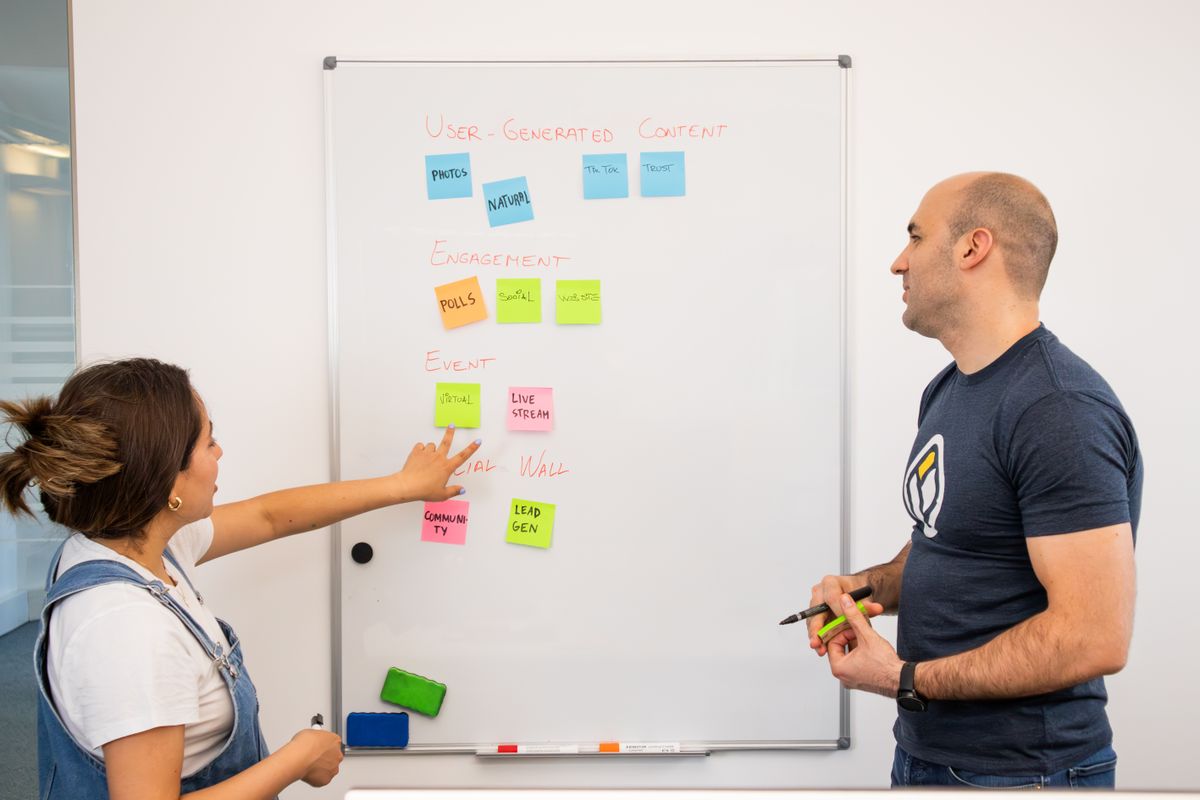
Creative Collaboration Remains the Foundation of Better Digital Products
Great digital products rarely come from a single discipline working in isolation. The products that consistently feel coherent — where the design, the engineering, and the business logic all pull in the same direction — are almost always built by teams that collaborate closely and early, not ones that hand work down a chain from strategy to design to engineering.
Why handoffs create weak products
The traditional sequential model — product defines requirements, design designs, engineering builds — loses information at every handoff. Constraints that engineering knows about don’t reach design until late. Design intent that isn’t fully understood gets simplified or lost in implementation. By the time a product ships, it often reflects compromises nobody actually chose on purpose — just accumulated gaps between disciplines that never talked directly.
What real collaboration looks like
Teams that avoid this bring design, engineering, and product perspectives into the same conversation from the start — not just at a kickoff meeting, but throughout a project. A designer who understands technical constraints designs more buildable solutions. An engineer who understands the user problem makes better judgment calls on the countless small decisions that specs never fully cover. That shared context is what keeps a product coherent as it moves from concept to shipped feature.
Prototyping as a shared language
One of the most effective tools for this kind of collaboration is a working prototype that everyone can react to together, rather than a written spec that each discipline interprets separately. Seeing and interacting with something — even a rough version — surfaces disagreements and misunderstandings far earlier than a document review does, when they’re still cheap to resolve.
The role of psychological safety
None of this works if people don’t feel comfortable raising concerns across disciplines — an engineer flagging that a design won’t perform well, a designer pushing back on a technical shortcut that will hurt the experience. The teams that collaborate best have normalized that kind of cross-functional pushback as a healthy, expected part of building something, not a turf conflict.
Why this matters more as products get more complex
As products increasingly weave together AI features, complex data, and multi-platform experiences, no single discipline has full visibility into everything that affects the outcome. Creative collaboration isn’t a nice cultural value anymore — it’s become a practical necessity for building something that actually holds together.